
June 17, 2026
COCABO: navigating turbulent times as partners
Norvis Vasquez, specialist in legal regulations at PRONATEC, visited the COCABO smallholder cooperative in Panama at the start of the year. He was accompanied by a long-standing PRONATEC customer who procures cocoa for a single-origin bar and places great importance on fair payment and direct sourcing. The focus was on overcoming the cooperative’s current challenges, strengthening trade relations and determining how producers can remain firmly integrated, even in a difficult market environment.
The discussions underlined just how many issues COCABO is currently grappling with: stable sales channels, productivity, quality assurance and regulatory requirements. Key aspects include collaborative social projects to support the common good, stable cocoa prices and sufficient working capital to get the harvest underway.

Visiting cocoa plots belonging to COCABO members
Finding a sustainable joint solution
A clear decision was also reached during the visit. COCABO had already purchased cocoa from its members and needed to make a sale that would cover the costs incurred. Timing can be crucial for cooperatives, especially during volatile market periods: if harvests are pre-financed but sales contracts have not yet been finalised and the market price subsequently falls, the cooperatives soon find themselves under pressure. They are unable to reduce the purchase price paid to the farming families retrospectively, even if the cocoa has to be resold on a weaker market.
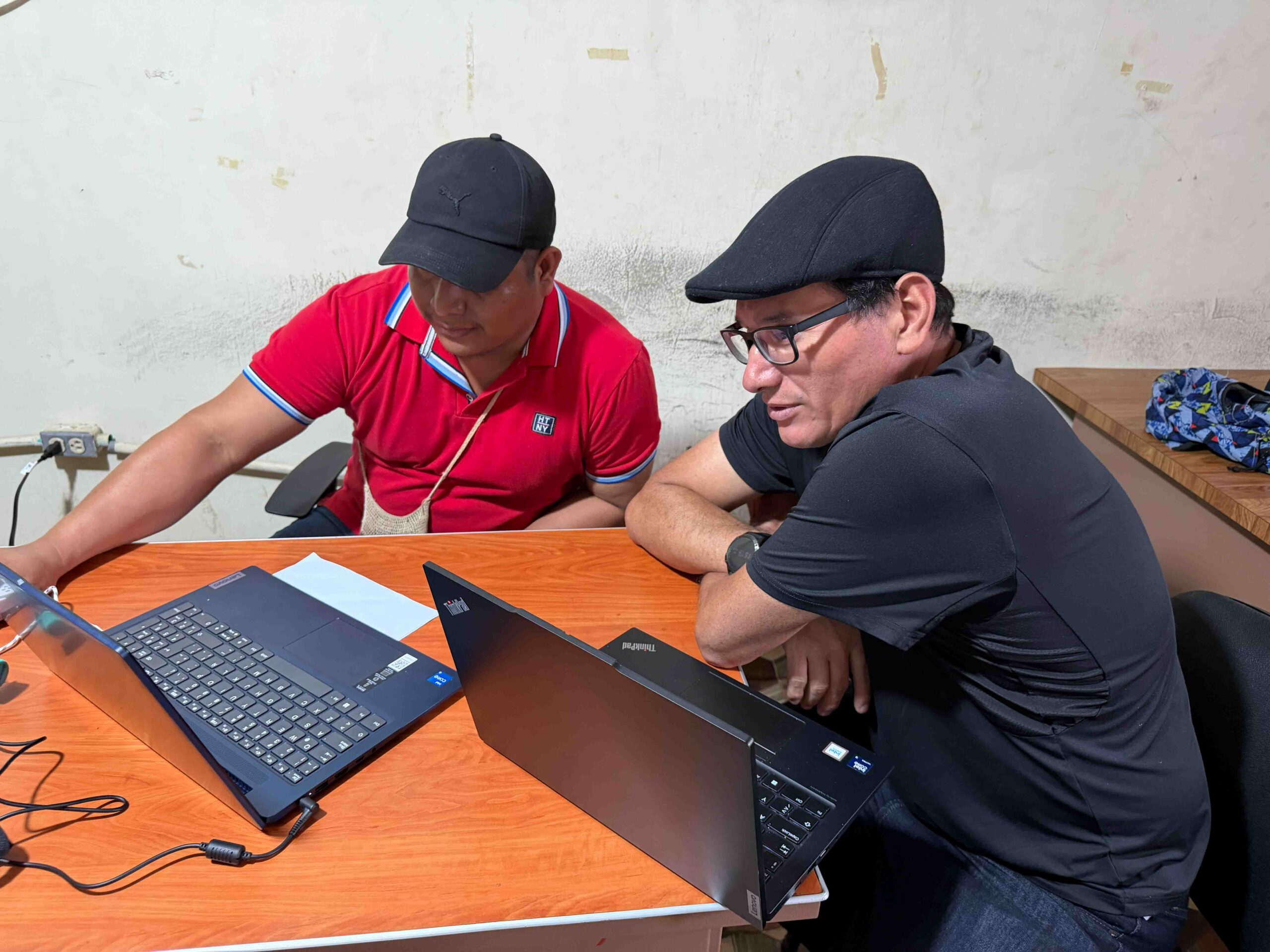
Discussing data, quality and regulatory requirements
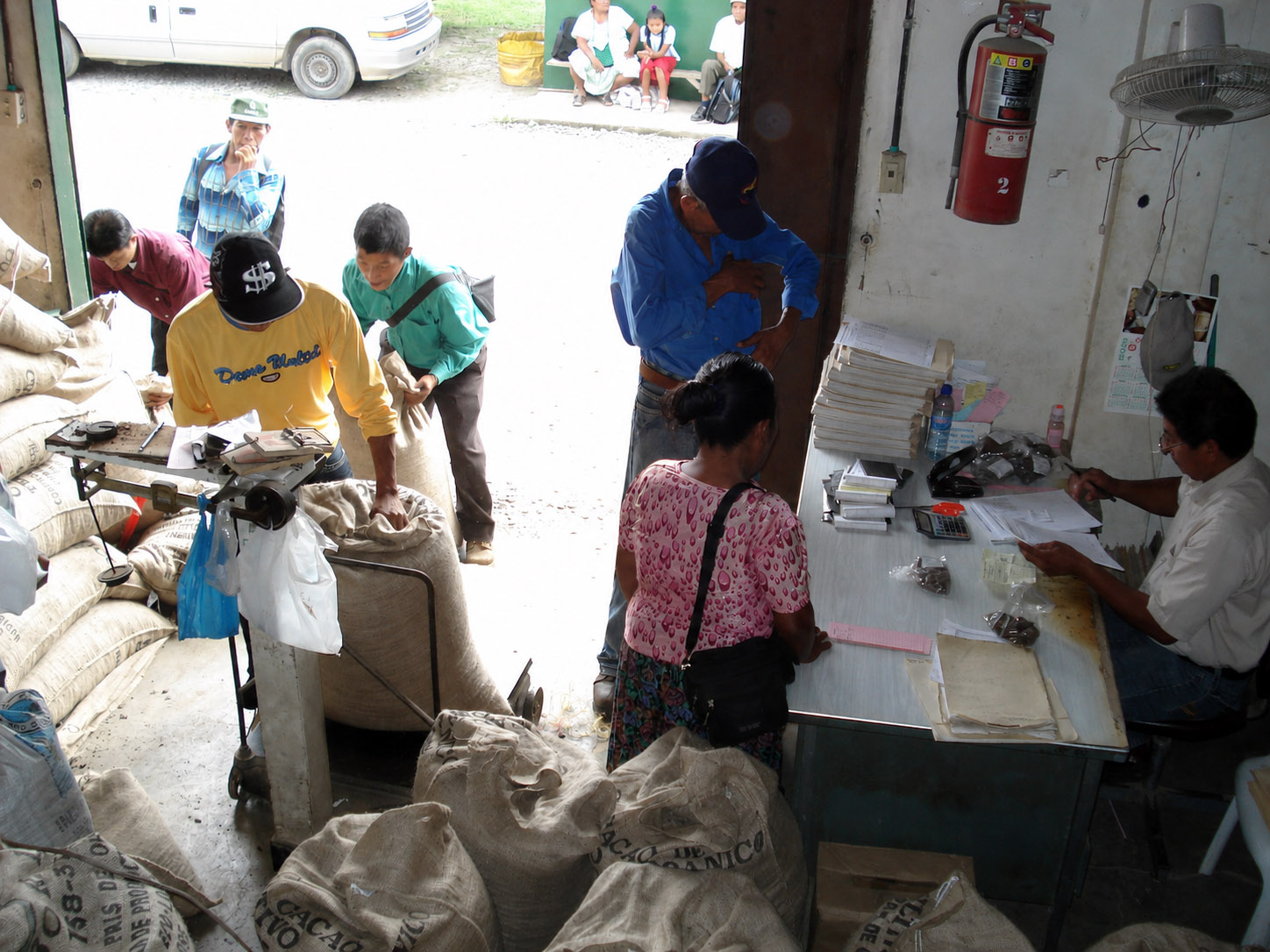
Cocoa being delivered to the COCABO smallholder cooperative
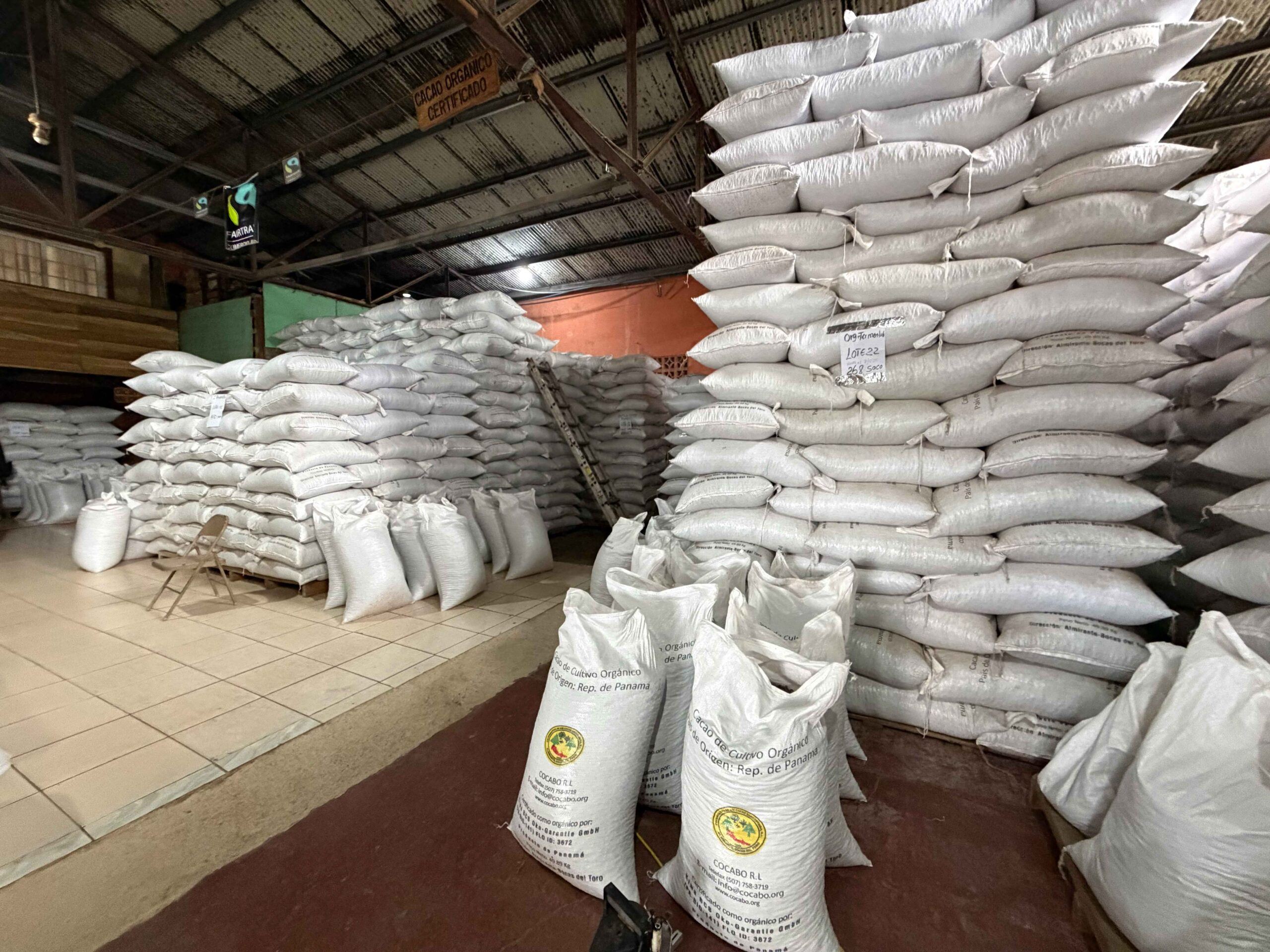
Storing and preparing the cocoa for onward transport
In close consultation with our long-standing client, a pricing strategy was adopted that was based on actual costs, thereby offsetting the negative impact of falling global market prices on the cooperative. As a result, the cocoa beans could ultimately be sold and exported not as an anonymous transaction at the going rate, but by working together and taking the specific local situation into account.
Another key topic of discussion was the ongoing improvement of quality. COCABO is looking for partners who not only buy organic and fair trade cocoa, but are also interested in the cooperative’s development. This concerns fermentation and drying, as well as the internal organisation and ongoing professionalisation of processes. To improve quality even further, COCABO needs equipment and tools that will enable smallholder farmers to dry and ferment the cocoa more evenly.
COCABO – a cooperative with a long history

COCABO – a long-standing PRONATEC partner
The COCABO smallholder cooperative was founded in 1952 and is considered to be Panama’s oldest cocoa cooperative. Today, it has around 1’500 members and manages an area of approximately 5’000 hectares. The organisation has its roots in Bocas del Toro, a region characterised by high biodiversity and small-scale farming. Almost all the members are from indigenous communities. Women now account for over 50 per cent of the workforce, and many management positions are also held by women. PRONATEC has been working with COCABO for around 25 years.
Many producers farm their land in the buffer zone of La Amistad International Park, a protected rainforest area. Agroforestry systems and the protection of biodiversity are firmly rooted in local farming practices. Fermentation and drying often take place directly in the families’ homes. This decentralised post-harvest processing is a distinctive feature of the cocoa from this region, although it makes joint quality assurance difficult for the cooperative.
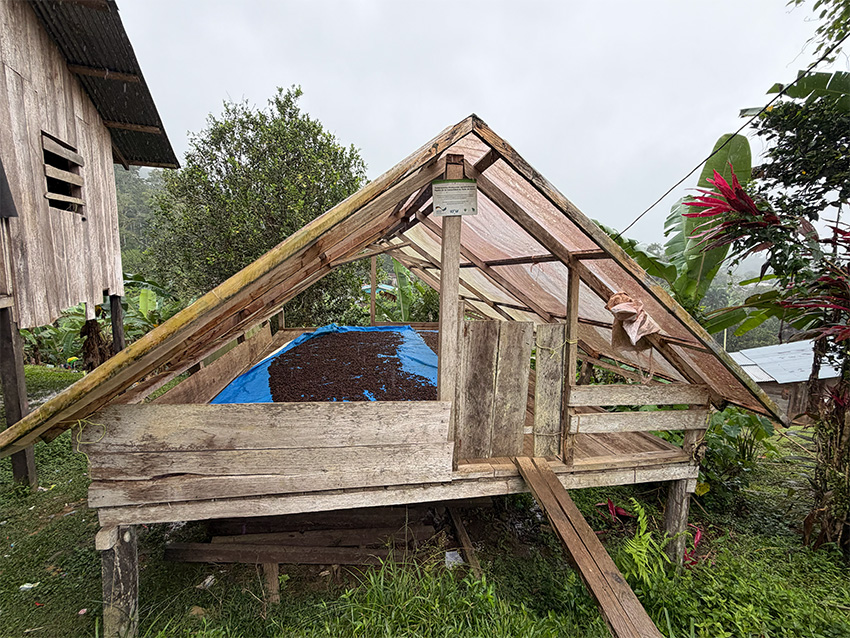
Decentralised drying of cocoa beans at the producers’ homes
EUDR: a complex task for small businesses in remote areas
Another key topic discussed during the visit was the implementation of the EU Regulation on Deforestation-free Products (EUDR). For COCABO, this means that their members’ cocoa plots must be georeferenced, and the relevant data must be recorded in a structured format. Precisely because many farming families operate in remote areas and near ecologically sensitive zones, this process is not only technically challenging, but also requires explanation, trust and careful handling of data.
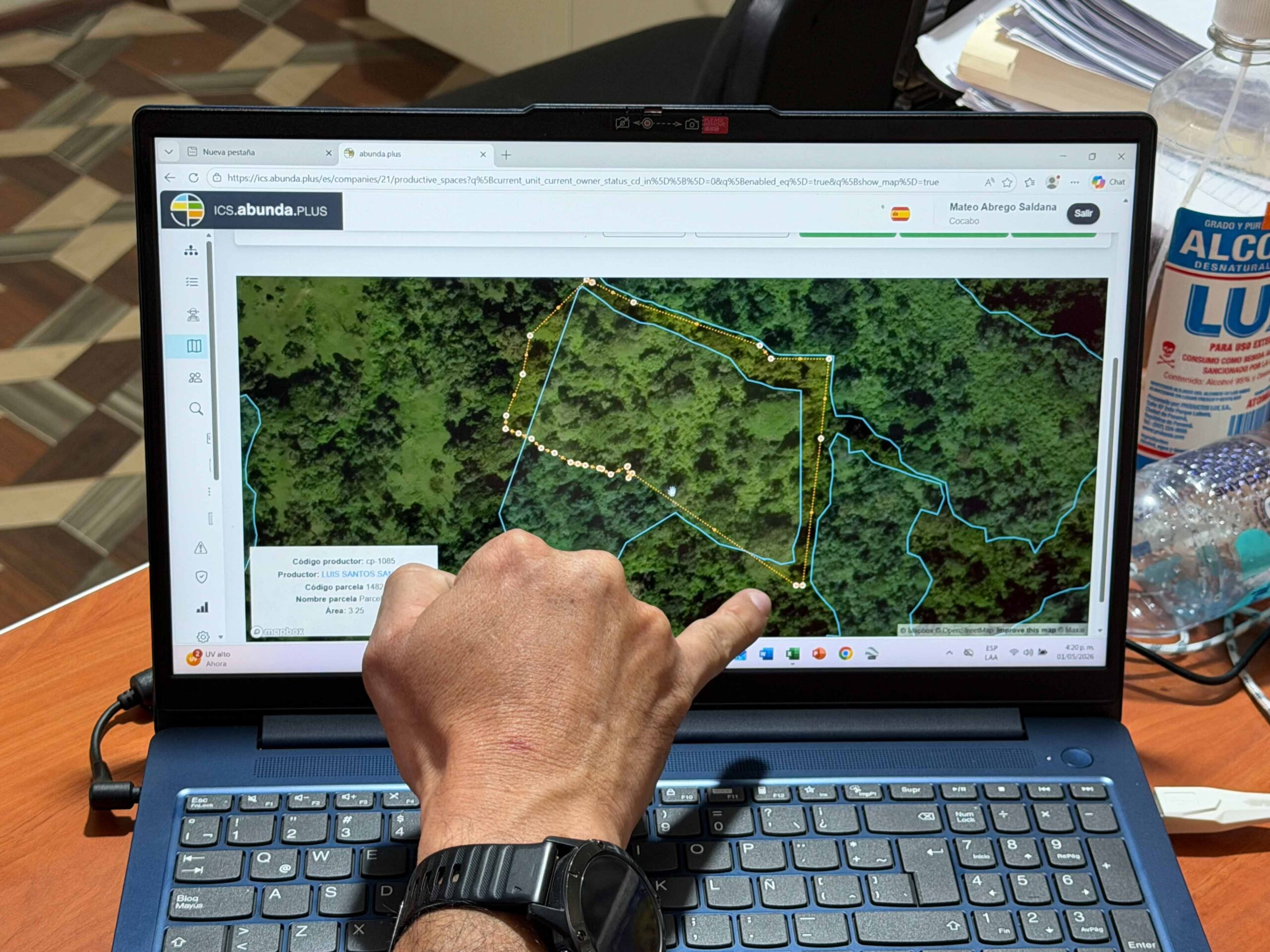
Georeferencing and documenting plots using the abunda+ software
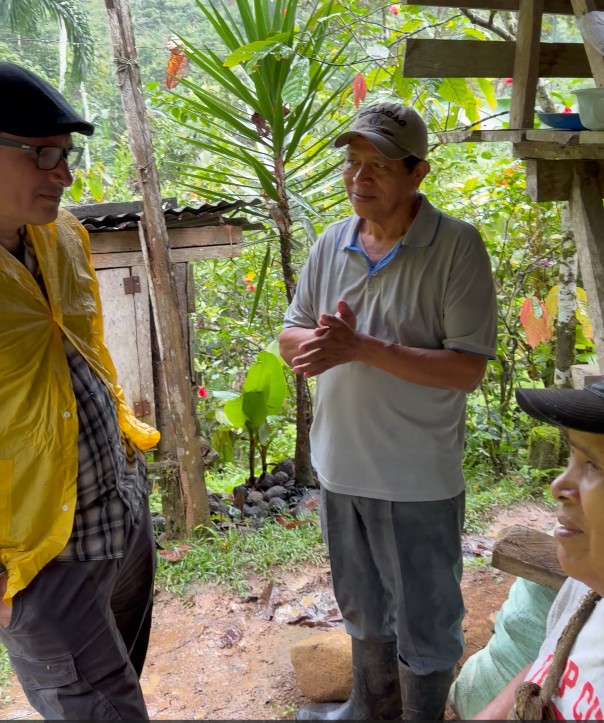
Norvis Vasquez in conversation with a smallholder farmer
At the same time, compliance with regulatory requirements must be demonstrated and officially documented. COCABO is already more than 90 per cent compliant with the EUDR requirements as far as georeferencing is concerned. Adjustments were also necessary in connection with the new EU organic production regulation.
The value of face-to-face contact
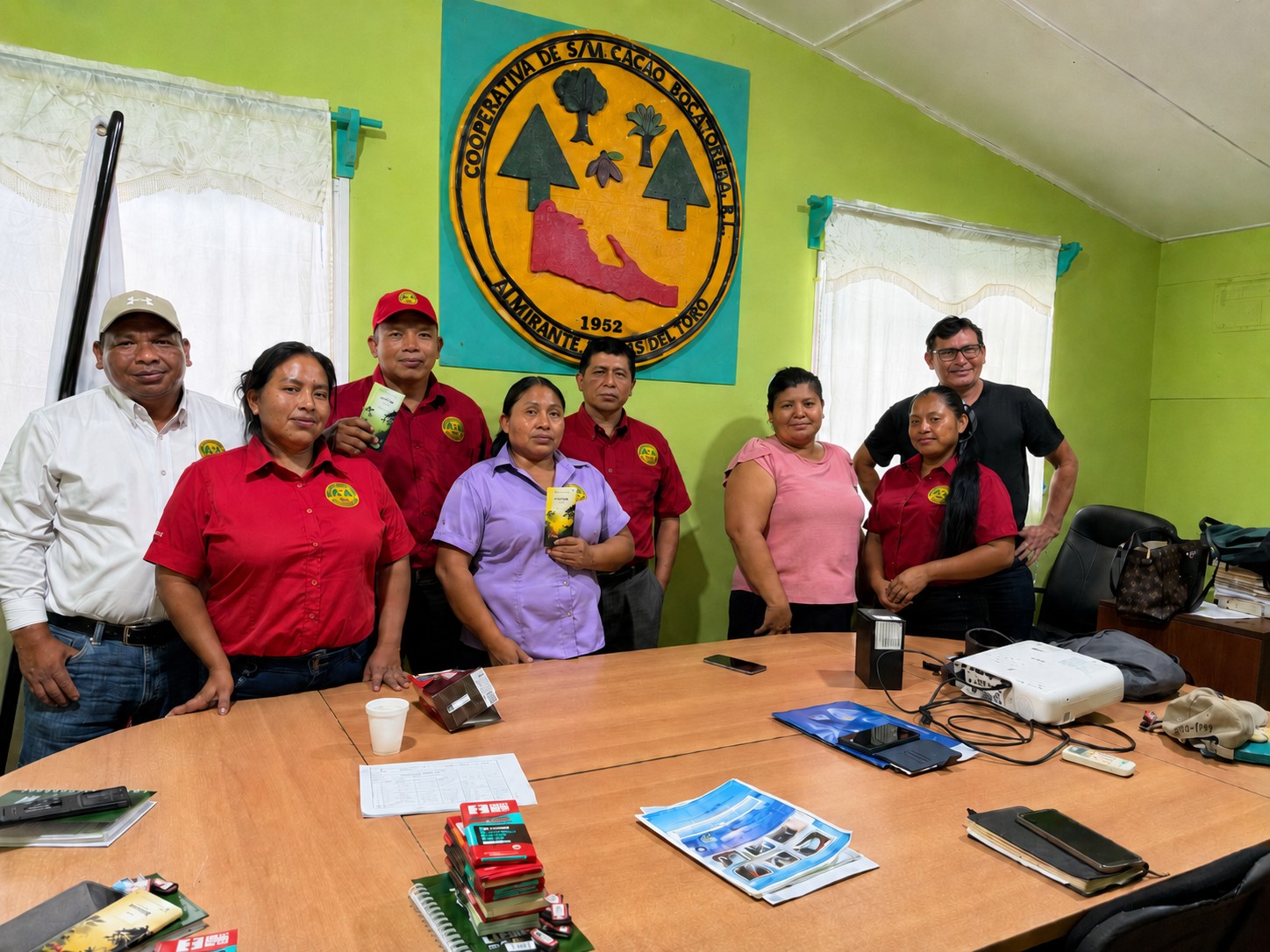
Round-table discussion with COCABO representatives in Panama
During the visit, it became clear that COCABO brings a number of strengths to the table: indigenous communities and women are represented not only in production but also in the cooperative’s management. In addition, the smallholder families remain committed to their environmental principles; agroforestry systems and the protection of biodiversity are part of their farming practices.
However, there are still some major obstacles to overcome. Price volatility has a direct impact on the cooperative and its members and is beyond their control. Other issues can be dealt with more specifically, but require consistent support from business partners such as PRONATEC, for example to help enhance drying and fermentation processes, offer technical advice on production, or implement regulatory requirements. COCABO currently has only twelve in-house auditors available for the internal control system.
The example of COCABO illustrates just how multifaceted the work of smallholder organisations has become. It is important for producers, cooperatives, PRONATEC and customers to keep talking to each other so that challenges can be identified at an early stage and tackled together. The visit to Panama showed that trade based on partnership flourishes when people take responsibility, make decisions together and remain committed to fair, reliable supply chains, even when faced with difficult market conditions.
«In situations like this, simply looking at the current market price is not enough. It is essential that everyone involved understands the situation and is prepared to share the responsibility. This is the only way for cooperatives to remain in a position to take action, even when market conditions are difficult.»
Nicolo Rieben, Head of Cocoa Beans at PRONATEC


«When you’re on the ground, you quickly see which issues a cooperative is really grappling with. At COCABO, it wasn’t just about prices, but also about quality, organisation, regulatory requirements and working out how to integrate smallholder families in the long term.»
Norvis Vasquez, PRONATEC specialist for legal regulations
COCABO – Our partner in Panama
By sourcing directly from long-standing partners, PRONATEC creates transparency and guarantees full traceability throughout the entire supply chain. The smallholder cooperative COCABO has been supplying us with high-quality organic and fair trade cocoa from Panama for around 25 years. Founded in 1952, the organisation now has around 1’500 members in the Bocas del Toro region. We are working with COCABO to improve quality, enhance traceability and ensure reliable prospects for producers in the long term.

