
Around 9’000 metric tons of organic cocoa, much of it within just a few weeks: the 2026 main harvest was exceptional for YACAO and FUNDOPO in several respects. While the cocoa farms in the east of the Dominican Republic are visibly recovering from the devastation caused by Hurricane Fiona four years ago, YACAO’s new processing capacities were already put to the test during their first main harvest. At the same time, this year’s harvest shows that record volumes do not automatically mean better economic conditions for smallholder families.
Jun 17, 2026
Record 2026 organic cocoa harvest for YACAO
The Dominican Republic can look back on an exceptionally strong year for cocoa. Similarly, YACAO and the smallholder organisation FUNDOPO recorded exceptionally large quantities of organic cocoa, exceeding the already high levels recorded the previous year. A record year is also emerging at national level.
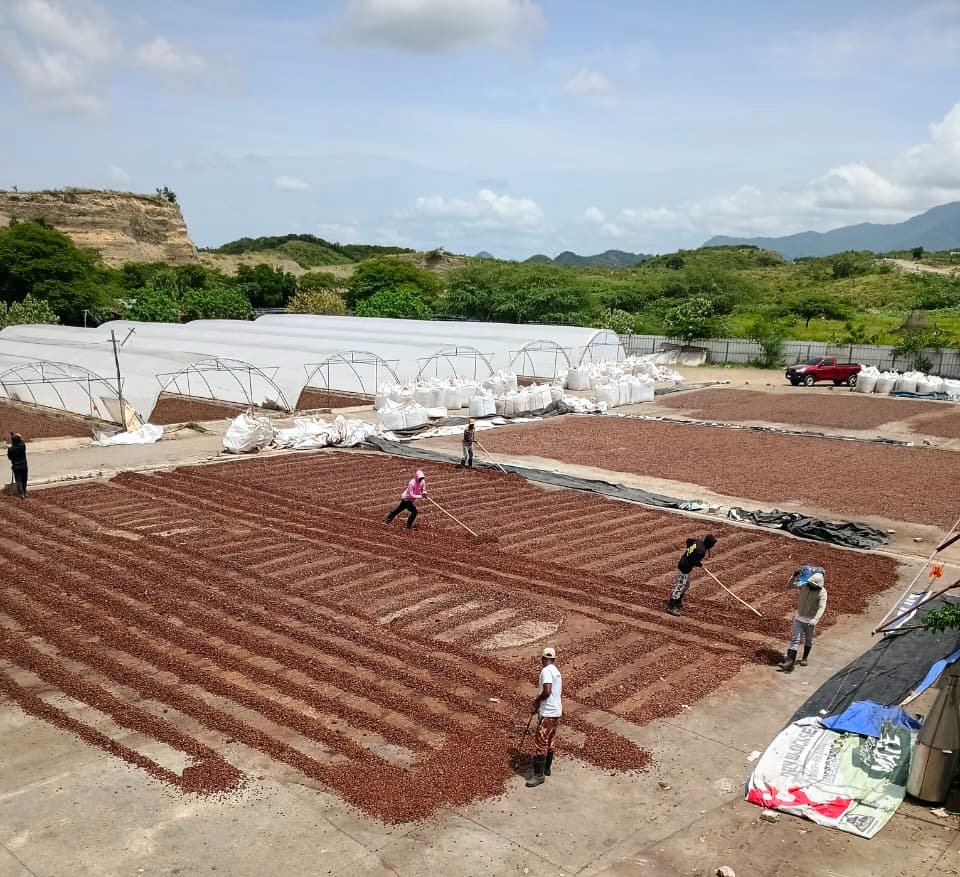
During the intense main harvest, YACAO’s drying areas were under considerable pressure …

… with the covered drying facilities also operating at full capacity
What was remarkable was not only the volume, but also the timing: the main harvest usually extends over a period of around twenty weeks, but this year, a large proportion of it was concentrated into a window of just four to eight weeks. As a result, the processing centres received much more cocoa than usual within a very short space of time. Consequently, the teams responsible for fermentation, drying, storage and logistics were under considerable pressure to manage these peaks reliably.
One key reason why YACAO was able to handle such large volumes was that it had sufficient financial liquidity available during the main harvest. This made it possible to purchase the quantities delivered on a continuous basis, even during the particularly busy weeks, thereby offering smallholder farmers a reliable market for their harvest.
Several factors responsible for the record harvest
The high harvest volume is the result of several developments that have taken place on the cocoa plots in recent years. This is particularly evident in the east of the Dominican Republic, where Hurricane Fiona caused considerable damage to the agricultural sector in September 2022. Four years later, FUNDOPO is noticing a marked upturn.
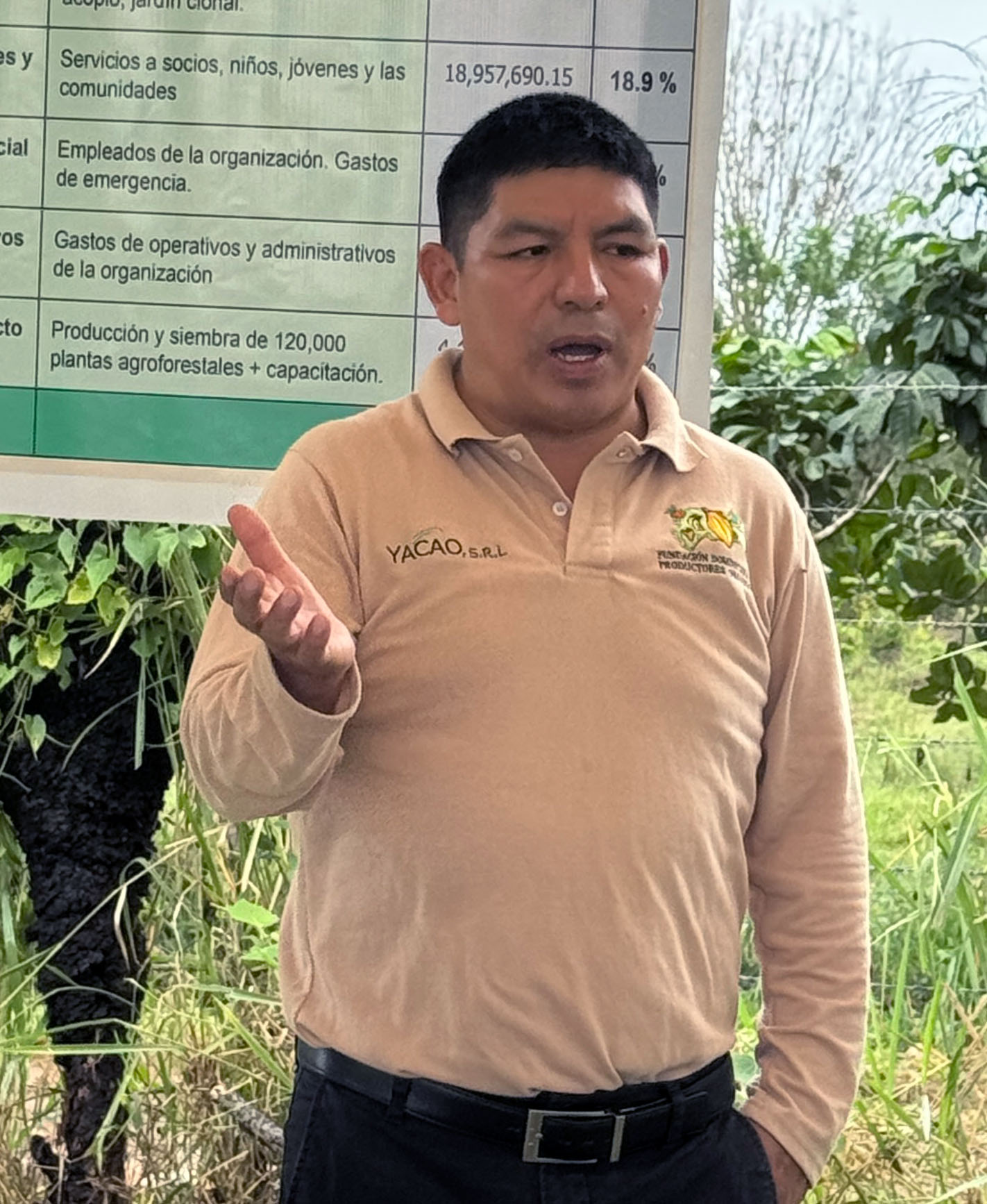
“What pleases us most is that the recovery following Fiona is finally becoming apparent. In the east, we are now producing more than before.”
Wilder Ñahui, Managing Director of FUNDOPO
In recent years, many producer families have also expanded their cocoa plots and introduced improved planting material. The high cocoa prices in particular have provided them with an incentive to plant new trees and make use of additional land. These developments are now also being reflected in the harvest volumes.
In addition, plant health plays a significant role: according to FUNDOPO, its members’ farms are virtually free from the two fungal diseases, frosty pod rot and witches’ broom, which can cause significant harm to cocoa crops in other countries of origin.
Around 9’000 metric tons within a few weeks
For YACAO, the large and highly concentrated harvest meant one thing above all else: the additional logistical capacities recently put in place had to prove their worth almost immediately.
In Navarrete, the expanded drying facilities were put to intensive use for the first time. This processing step is particularly crucial for fermented Hispaniola cocoa. After fermentation, the beans need enough time and space to dry. Otherwise, a bottleneck can quickly arise during peak harvest periods. Adequate drying capacity is therefore important not only for cocoa quality, but also for the smooth processing of large quantities.
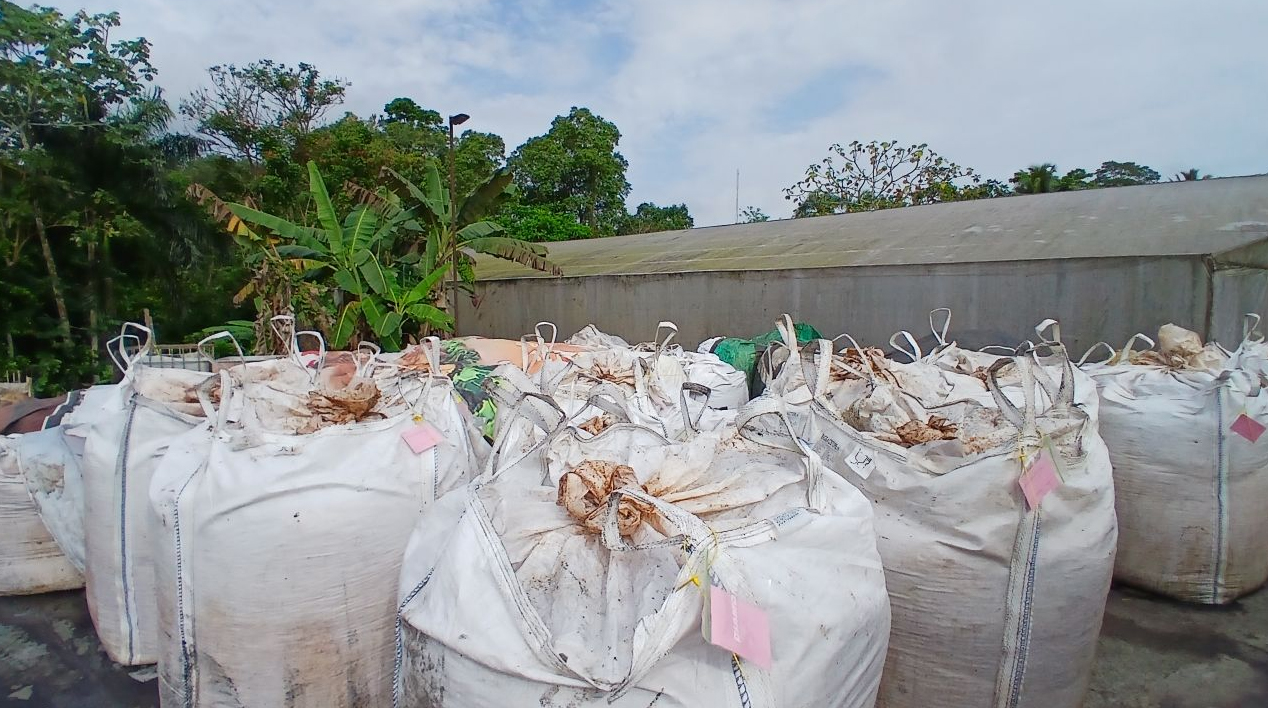
After drying: cocoa beans in big bags, ready for export
The new export centre at Santo Domingo Norte also played a key role during the peak harvest period. This is where the cocoa from the various processing centres is brought together, cleaned, graded and prepared for export. Logistics from the export centre to the port mostly ran smoothly, despite the large volumes.
However, simply increasing capacity is not sufficient to cope with a harvest of this magnitude. Ultimately, it is the employees at the processing centres who ensure that the individual steps are well coordinated, even on particularly busy days. That is why YACAO invested in training on fermentation and drying processes at the same time.
On the management team, Michael Vogel and Yves Kubli have clearly divided their respective responsibilities and work closely with one another. This year’s harvest in particular highlighted just how important well-established processes and short decision-making channels are.
“The harvest was very concentrated this year. Our additional processing and storage capacities immediately proved their worth. I am very proud of what our employees achieved during the peak harvest period. Thanks to the tireless efforts of everyone involved and the excellent coordination with the supporting departments, we were able to process the large volumes reliably within a short space of time.”
Michael Vogel, CFO YACAO
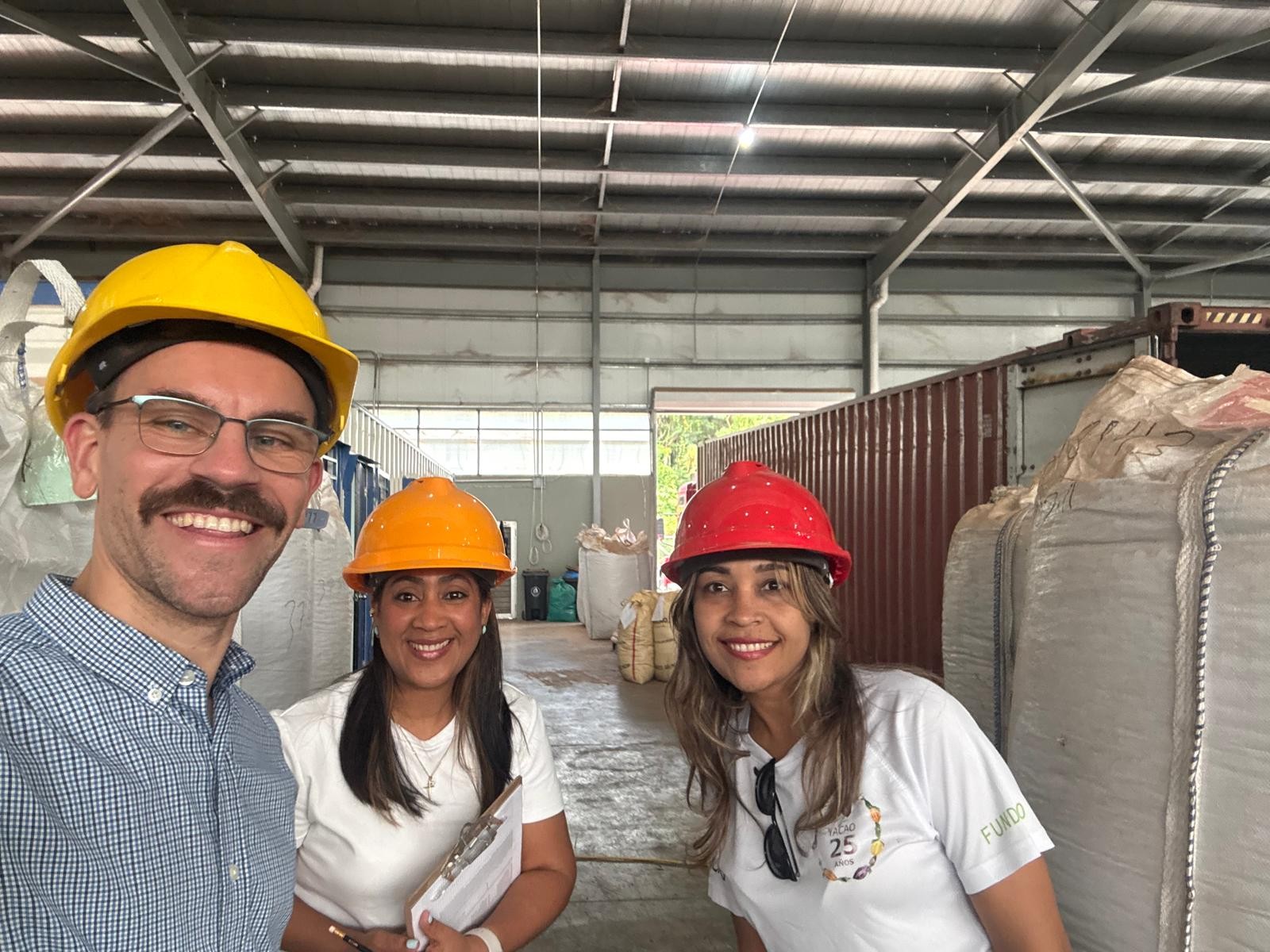
A record harvest does not necessarily mean better economic conditions
For many smallholder families, however, the record harvest did not lead to a corresponding improvement in their economic circumstances. One of the risks associated with high volatility in the cocoa market became apparent during the main harvest: between April and June, precisely when the smallholder farmers had a particularly large amount of cocoa to sell, the global market price fell, while, according to FUNDOPO, labour costs for tending, pruning and harvesting remained high. This meant that the revenue per kilogramme decreased, while the amount of work required on the farms remained unchanged.
In addition, the administrative burden associated with documentation and certification is rising. Geodata must be collected and maintained in order to fulfil the due diligence requirements under the EU Regulation on Deforestation-free Products (EUDR). This is compounded by complex certification processes for organic and fair trade products. The new EU organic regulation introduces additional requirements for smallholder producer groups, for example. For FUNDOPO and its members, this means extra work and greater demands on resources. In view of the growing demands, YACAO has also increased its staffing capacity in certification.
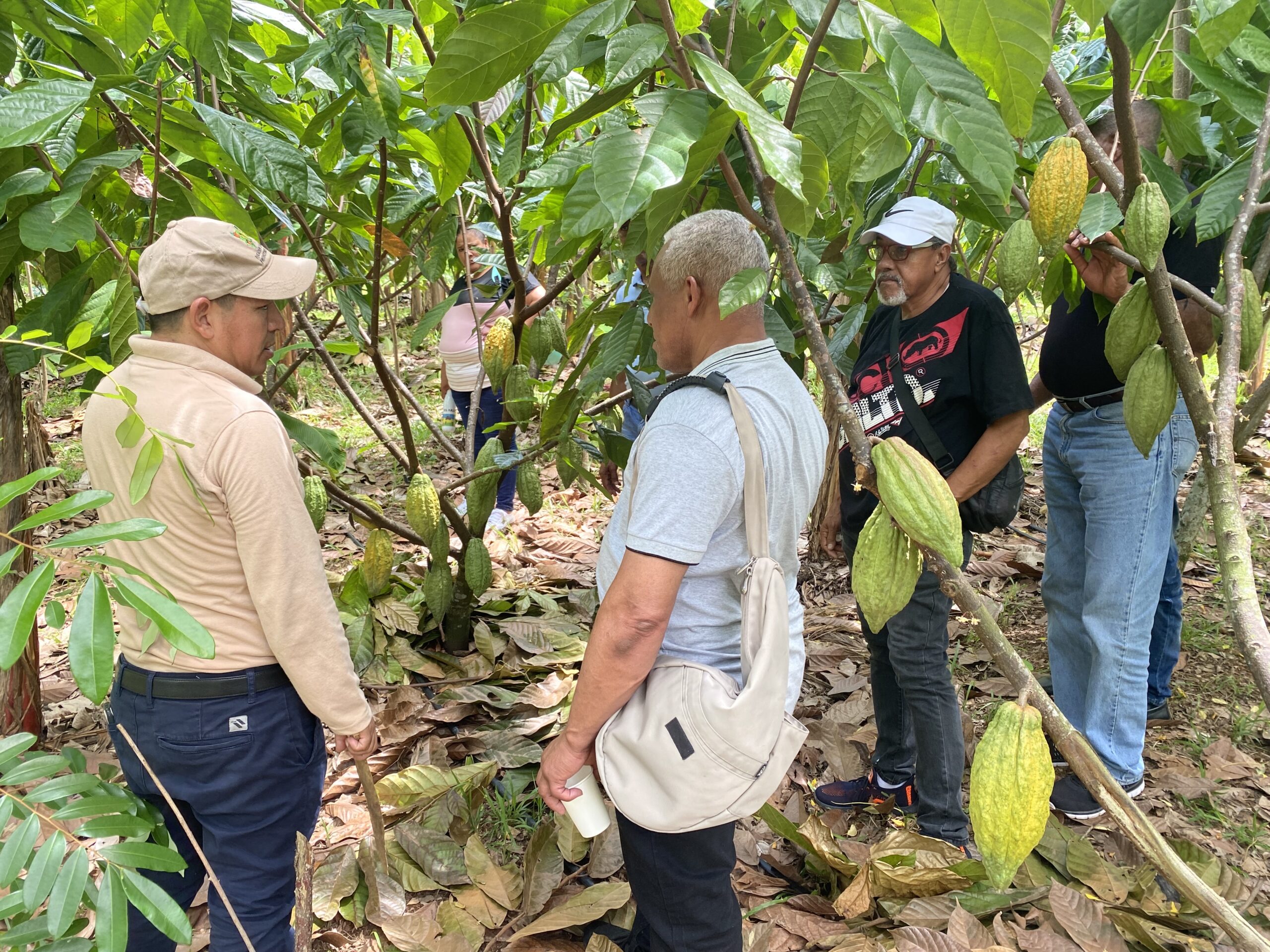
Direct exchange with smallholder farmers on their cocoa plots
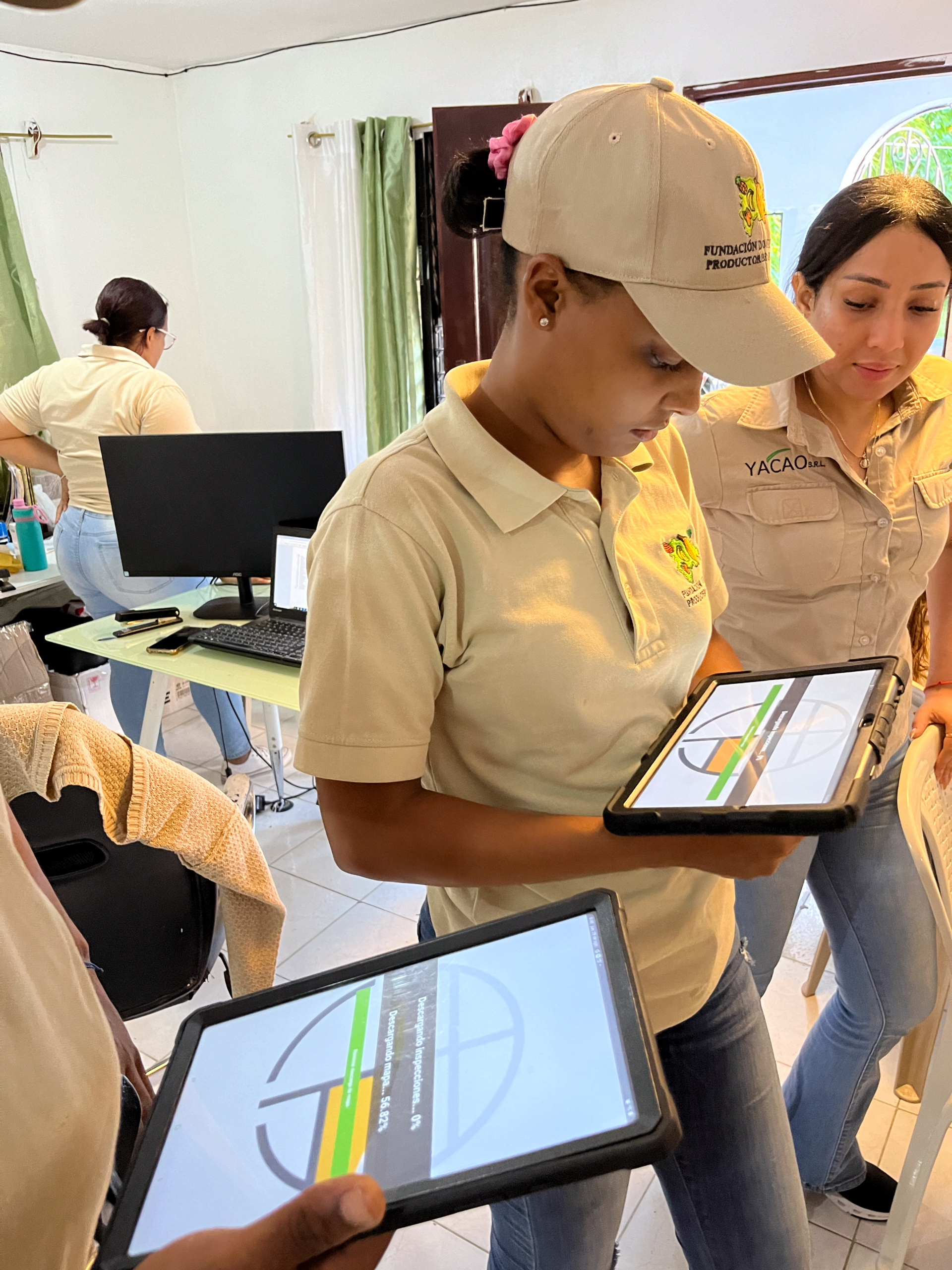
Digital documentation on site – an important part of traceability
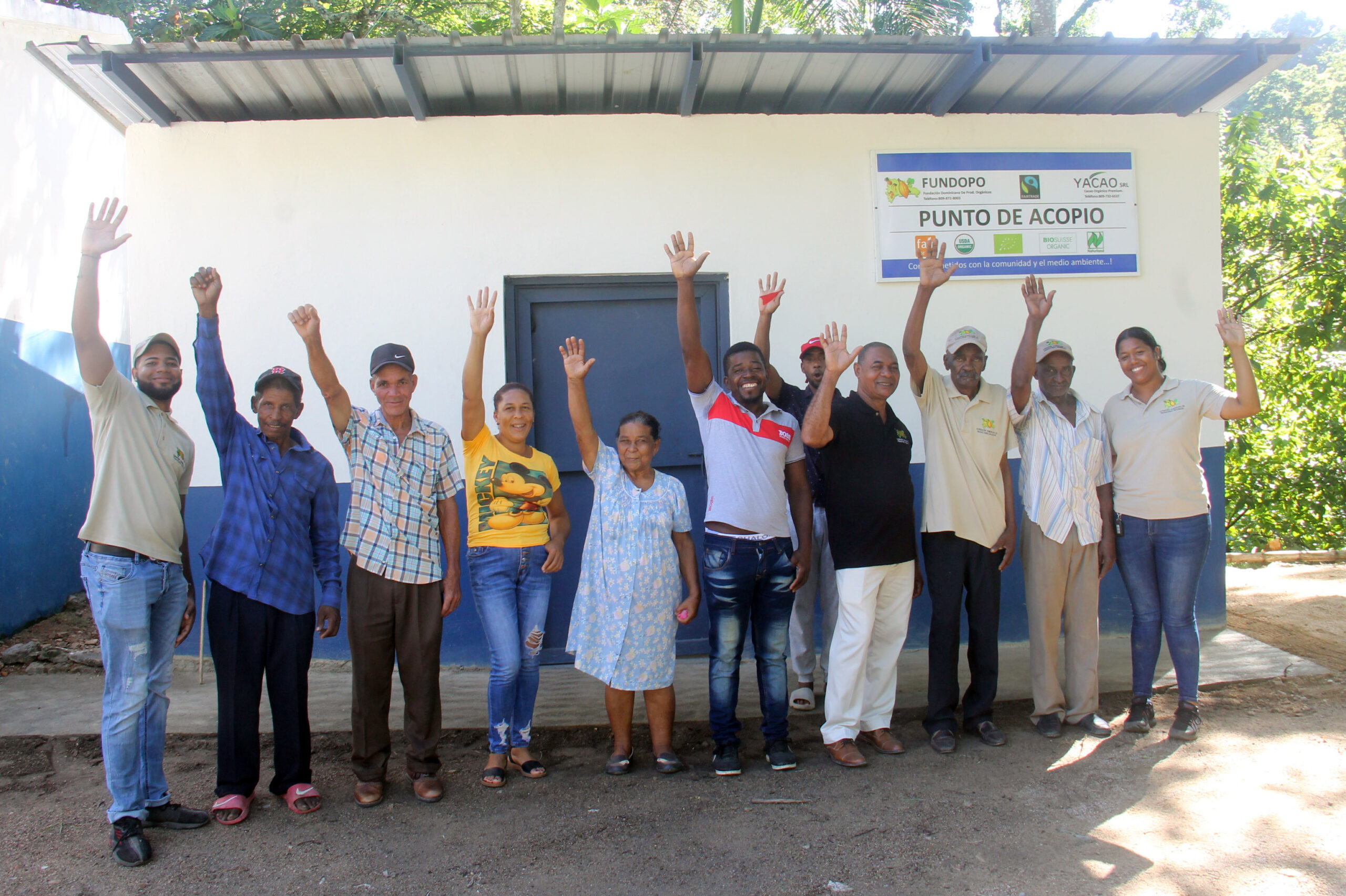
Smallholder farmers at an organic cocoa bean collection point
The current economic situation does nothing to help alleviate one of the long-term challenges: “The average age of our smallholder farmers is now over 60, and it is becoming more and more difficult to find people willing to take over the work on the plots,” explains Wilder Ñahui. The generational transition is therefore increasingly becoming a key challenge for smallholder organic cocoa production.
Ongoing focus on quality
The additional capacities and the quality results achieved so far suggest that the measures taken are having an impact. Due to the large quantities of Hispaniola cocoa, our sensory analysis capacity in the laboratory is currently under considerable strain. The task now is to assess how quality is developing and feed the findings back to the processing centres as quickly as possible. At the same time, the aim is to consolidate the improvements that have been made and to keep processes as consistent as possible across the various centres.
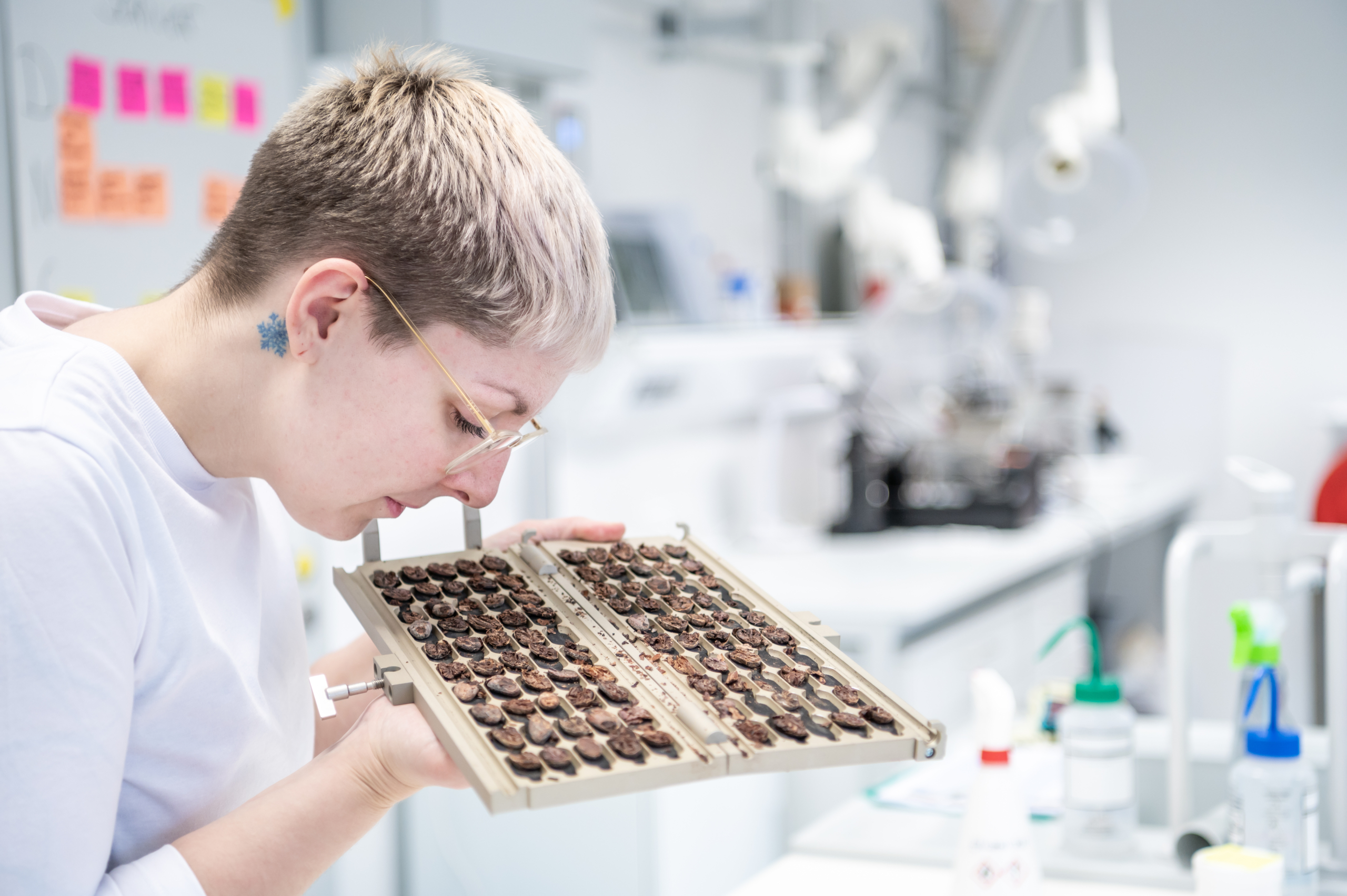
Sensory assessment is used to evaluate the quality and flavour profile of the cocoa beans
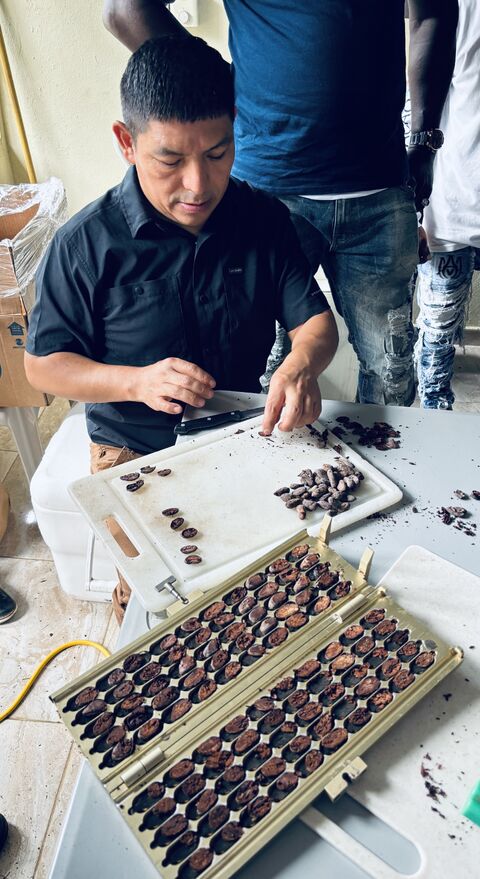
The cut test shows how well the beans have fermented
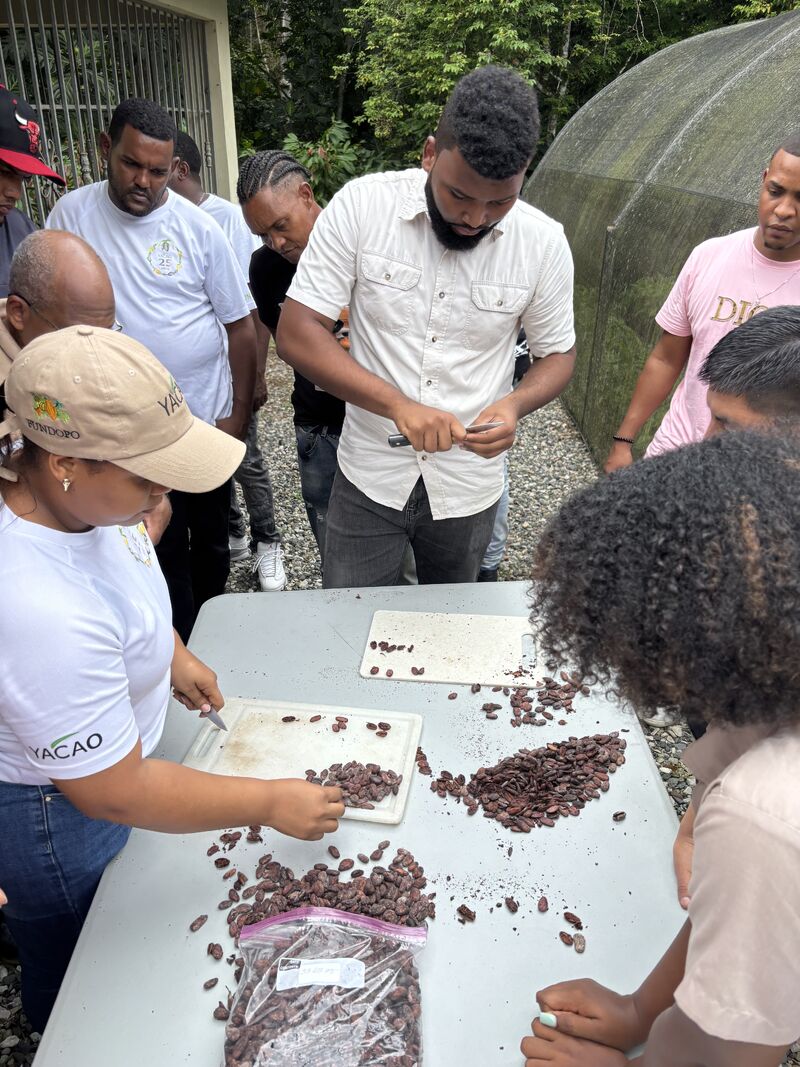
Regular training sessions provide an opportunity to share experience and knowledge
YACAO intends to continue building its expertise. It is planning to hold training sessions on fermentation, quality analysis and laboratory work in order to standardise processes even further and strengthen quality control.
The outlook for the forthcoming mid-crop is currently rather subdued. Following the record main harvest, lower yields are expected; even the larger local producers are anticipating a below-average mid-crop. Furthermore, due to the comparatively low levels of rainfall in recent weeks, the start of the harvest could be delayed by a few weeks. The existing processing capacities are encouraging, but the current hurricane season remains a further source of uncertainty.
Our partners in the Dominican Republic
Through our direct connections with long-standing partners, we create transparency and guarantee full traceability along the whole supply chain. Our subsidiary YACAO has been supplying us with high-quality organic and fair trade cocoa from the Dominican Republic for over 25 years. The YACAO team oversees the purchasing, fermentation, drying, quality control and export of the cocoa beans. This takes place in close collaboration with the smallholder organisation FUNDOPO, which was established in 2000. As a purchaser of the entire crop, we are a reliable partner for the affiliated smallholders, which number over 3’800.
