
In many parts of the Dominican Republic, cocoa plots consist of trees that have been cultivated for decades. Individual trees that are older or less productive need to be replaced over time. For many smallholders, this raises the question of how they can regenerate their organic cocoa farms without losing the diversity of traditional agroforestry systems. This is where a project run by PRONATEC, YACAO and FUNDOPO comes in: it focuses on identifying “Superárboles” – cocoa trees that have performed particularly well in local conditions. So far, 17 of these Superárboles have been identified – and around 4’000 young plants have already been grown from their seeds.
Jun 17, 2026
17 Superárboles for the organic cocoa of tomorrow
The smallholder cooperative FUNDOPO runs its own nursery, where it produces cocoa saplings which are sold to smallholder farmers at cost price. In future, planting material from locally selected Superárboles will complement the range. This will enable FUNDOPO to incorporate the genetic diversity of Dominican cocoa more fully into its own seedling propagation programme.
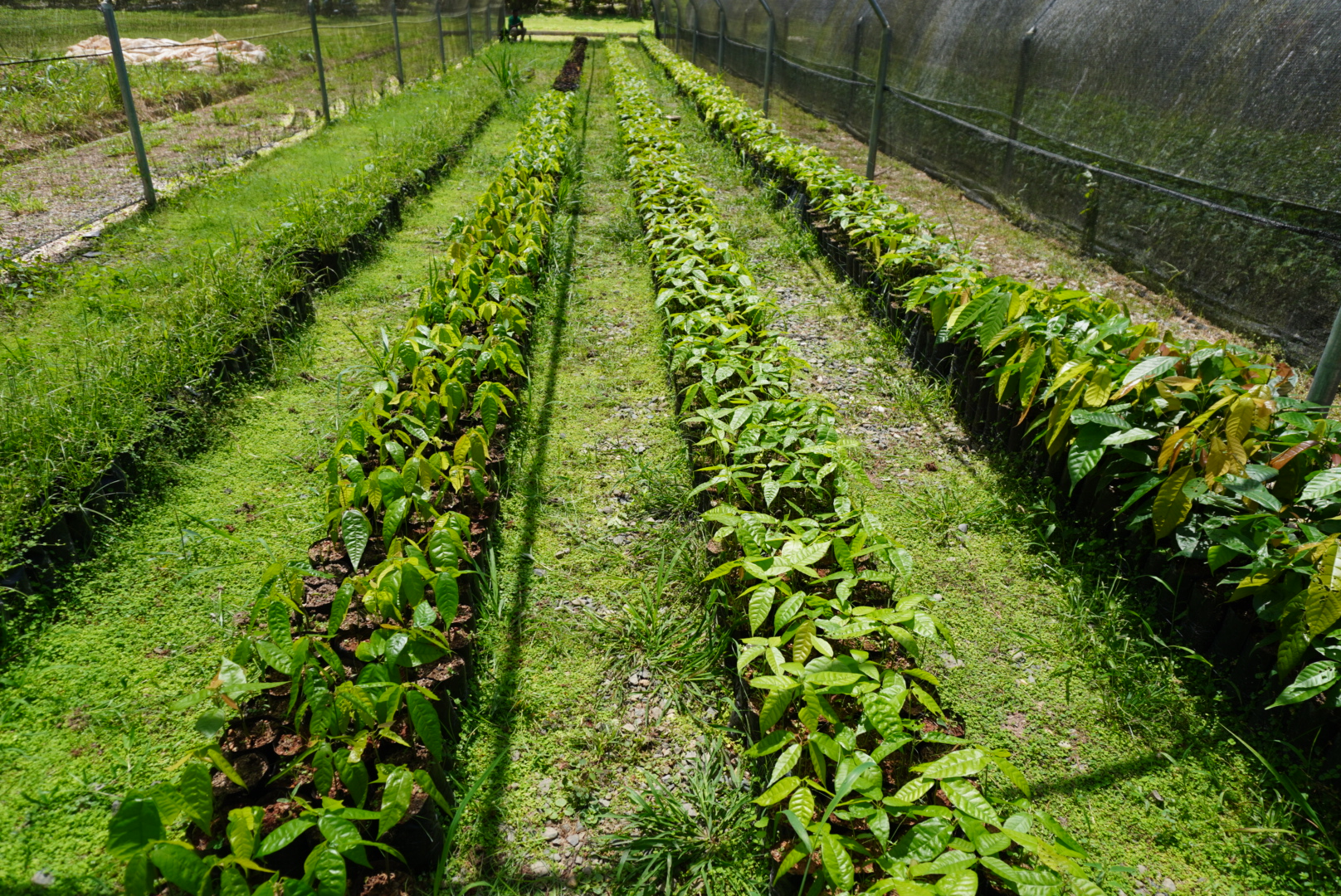
Young cocoa plants are raised in FUNDOPO’s nursery …
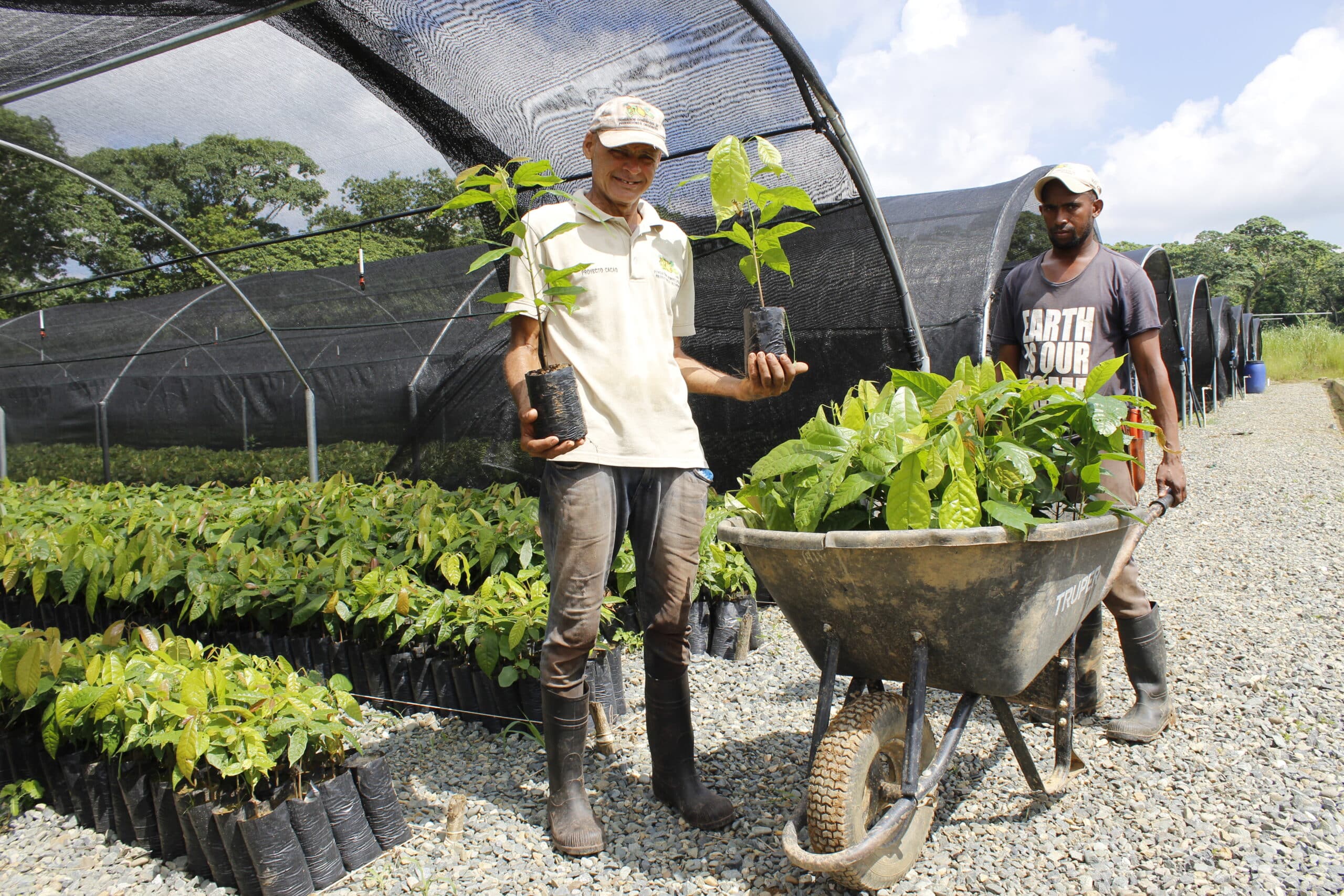
… and prepared for distribution to smallholder farmers
What are Superárboles?
The term Superárboles refers to cocoa trees that stand out for their particularly high fruit yield, good health or vigorous growth. The search for Superárboles is at the heart of the “Diversity in and around cocoa: Fostering diversity in Dominican cocoa production with selection, economic diversification, know-how transfer and seedlings production” project that PRONATEC is implementing in the Dominican Republic in association with YACAO and FUNDOPO. The project is part of the SWISSCO Innovation programme and is supported by the State Secretariat for Economic Affairs (SECO). The project was originally scheduled to run from September 2023 to September 2025; it has since been extended until the end of 2026.
Trees are selected in collaboration with the producer families, whose long-standing observations are taken into account alongside a technical assessment by FUNDOPO’s experts.
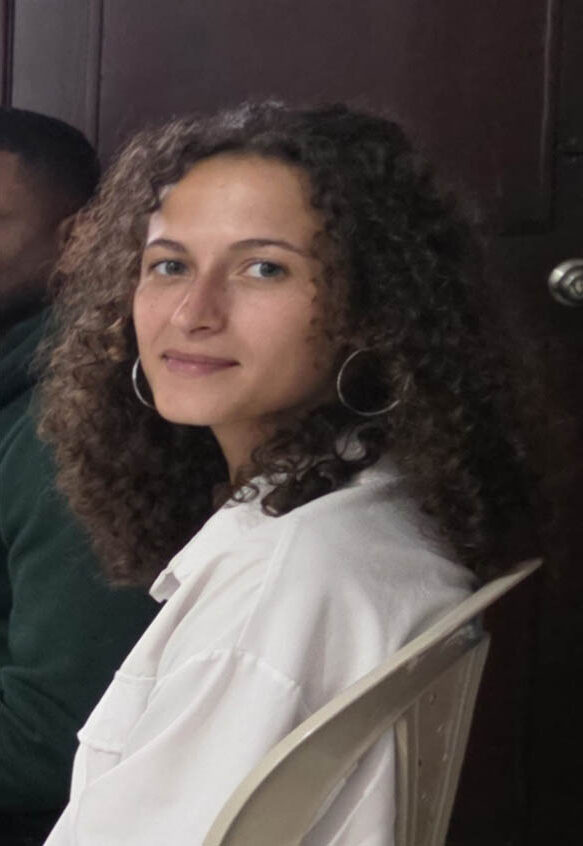
“We have always chosen the trees together by walking through the plots with the producers and our cocoa expert looking for healthy-looking trees bearing plenty of fruit. It will be interesting to see which of these trees actually prove their worth in the coming years.”
Lucie Hofmann, agronomist
More challenging than expected
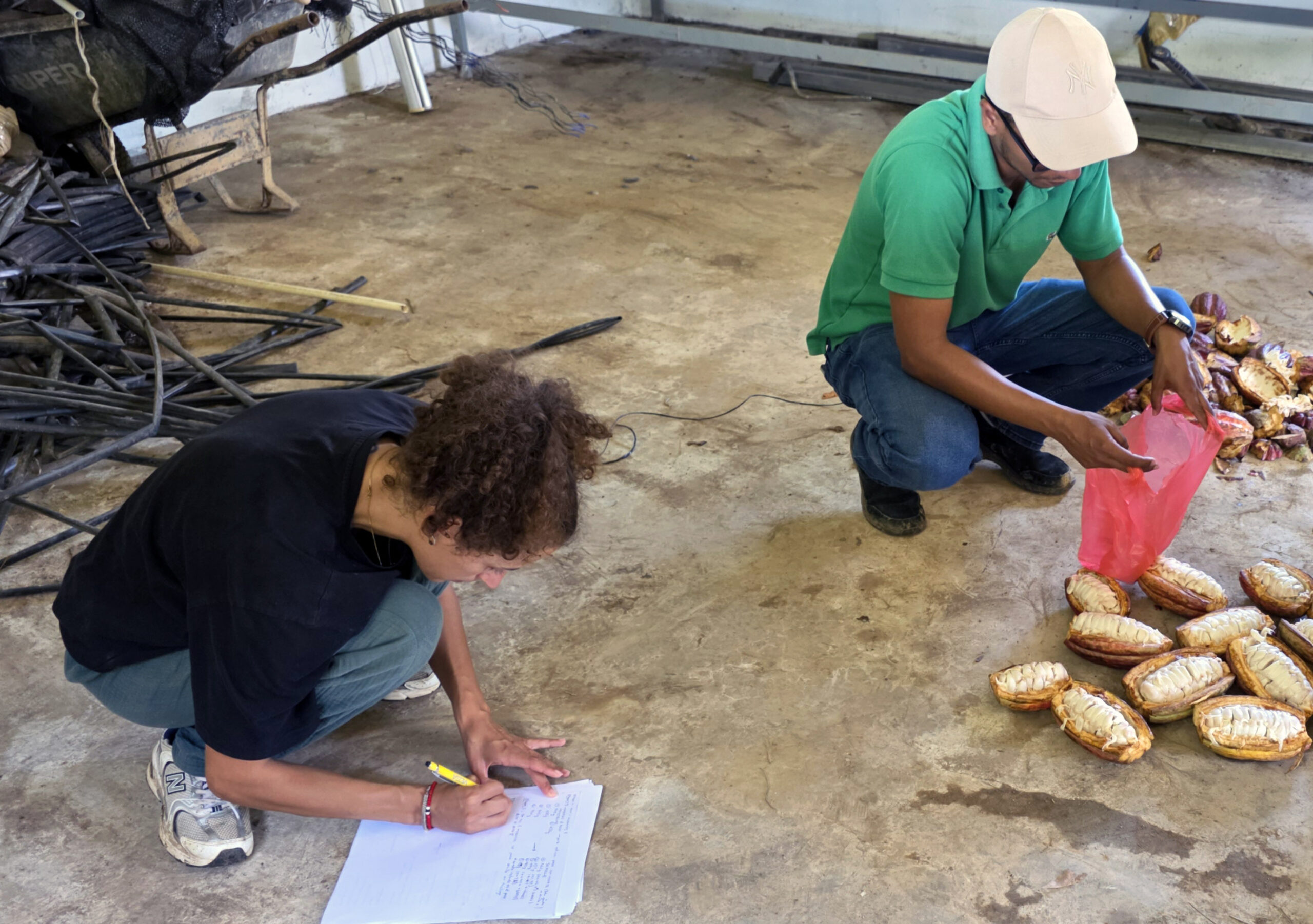
Cocoa pods from a potential Superárbol are inspected and documented on site
During the initial field visits, it became apparent that suitable Superárboles were not as easy to identify as originally expected. Many producers could not immediately name a single tree that clearly stood out from the rest. Consequently, the criteria were refined and the field visits became more targeted.
From November 2025 to June 2026, the Swiss agronomist Lucie Hofmann assisted this work during an internship in Yamasá. She worked with Segundo Gálvez, FUNDOPO’s local cocoa expert, and Manfred Blandón, a project intern from Nicaragua, to document potential Superárboles and help at the nursery. The team recorded aspects including the number and ripeness of the cocoa pods, as well as any visible damage caused by disease or insects. The producer families’ assessments of yield, quality and susceptibility to disease were also taken into account in the selection process.
From Superárboles to young plants
Once the trees have been selected, the fruits from each cocoa tree are harvested separately. The seeds obtained are then sown separately in the nursery according to their parent tree. This ensures that the material from each mother tree remains distinct, making it possible to trace the origins of the resulting seedlings back to an individual tree. Each mother tree is assigned its own code, which is retained throughout all stages of the process. Even in the first few months, it is possible to see which seeds have germinated well and which young plants are developing strongly.
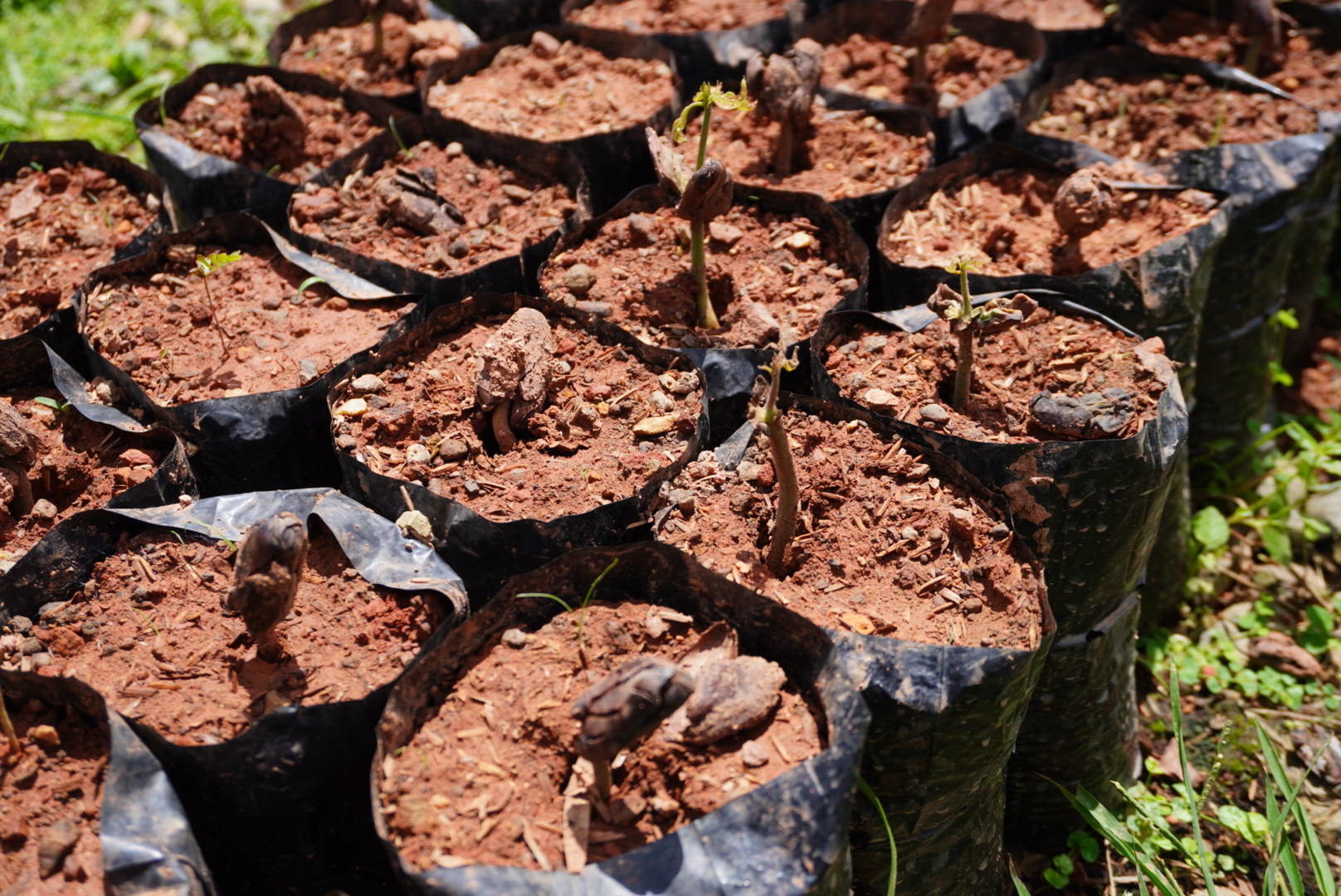
The first young plants are grown in the nursery from seeds of the preselected trees
Four to five years until the first reliable results
However, these initial observations do not allow us to draw any conclusions about how the trees will fare on cocoa plots in the future. The 17 Superárboles identified so far represent a preliminary selection. It will take around four to five years, once their offspring begin to bear fruit themselves, to assess which trees display the desired characteristics.
The young plants grown in the nursery are grafted using planting material from selected Superárboles. The use of this material is agreed with the respective producer families. Grafting can reduce the time needed until the first harvest. In the long term, this will enable FUNDOPO to support the gradual regeneration of existing cocoa farms using locally selected planting material.
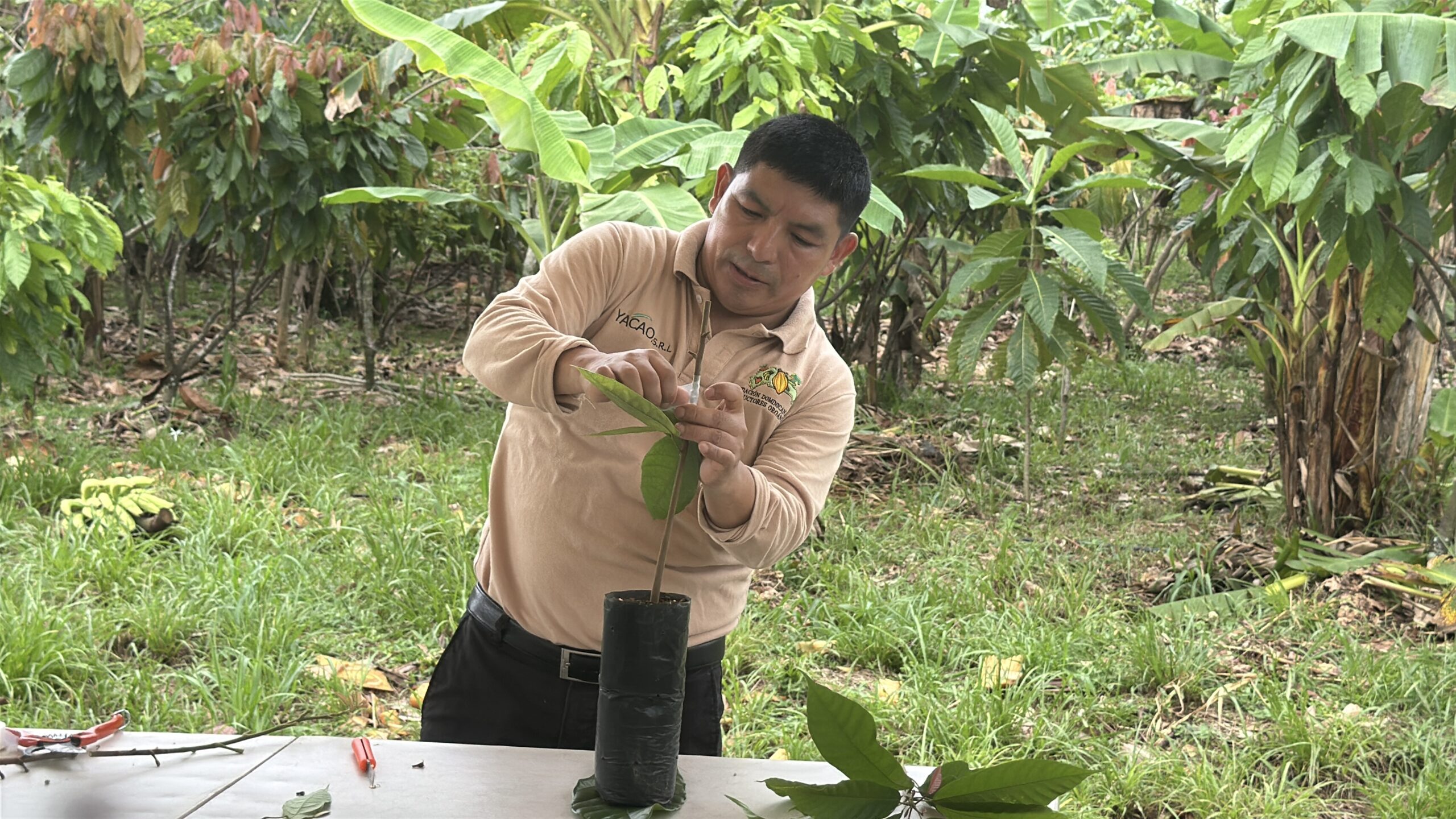
Careful handwork while grafting a young cocoa plant
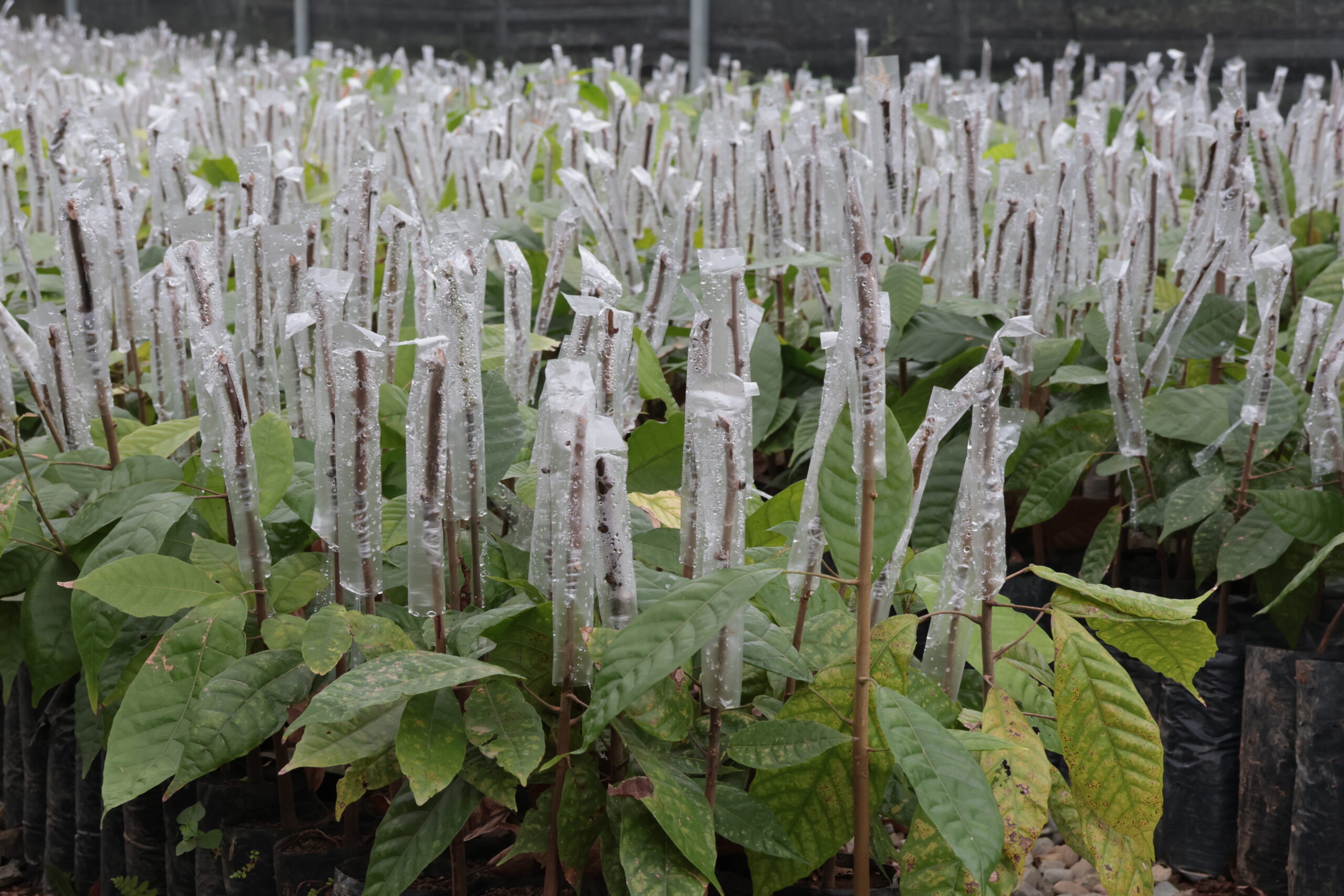
Young plants in FUNDOPO’s nursery after grafting
Diversity beyond cocoa
Selecting local cocoa trees is just one aspect of the diversity project. At the same time, FUNDOPO is expanding its own nursery to include further crops for existing agroforestry systems and is providing smallholder farmers with training in the latest methods of agroforestry.
Cocoa yields should not be increased at the expense of shade and biodiversity on the plots of land. In fact, growing additional crops such as avocados, as well as suitable timber species, can open up further sources of income for smallholder families. The aim is to establish productive organic cocoa farms where cocoa, shade trees and other useful trees can coexist and contribute to sustainable livelihoods for producer families.
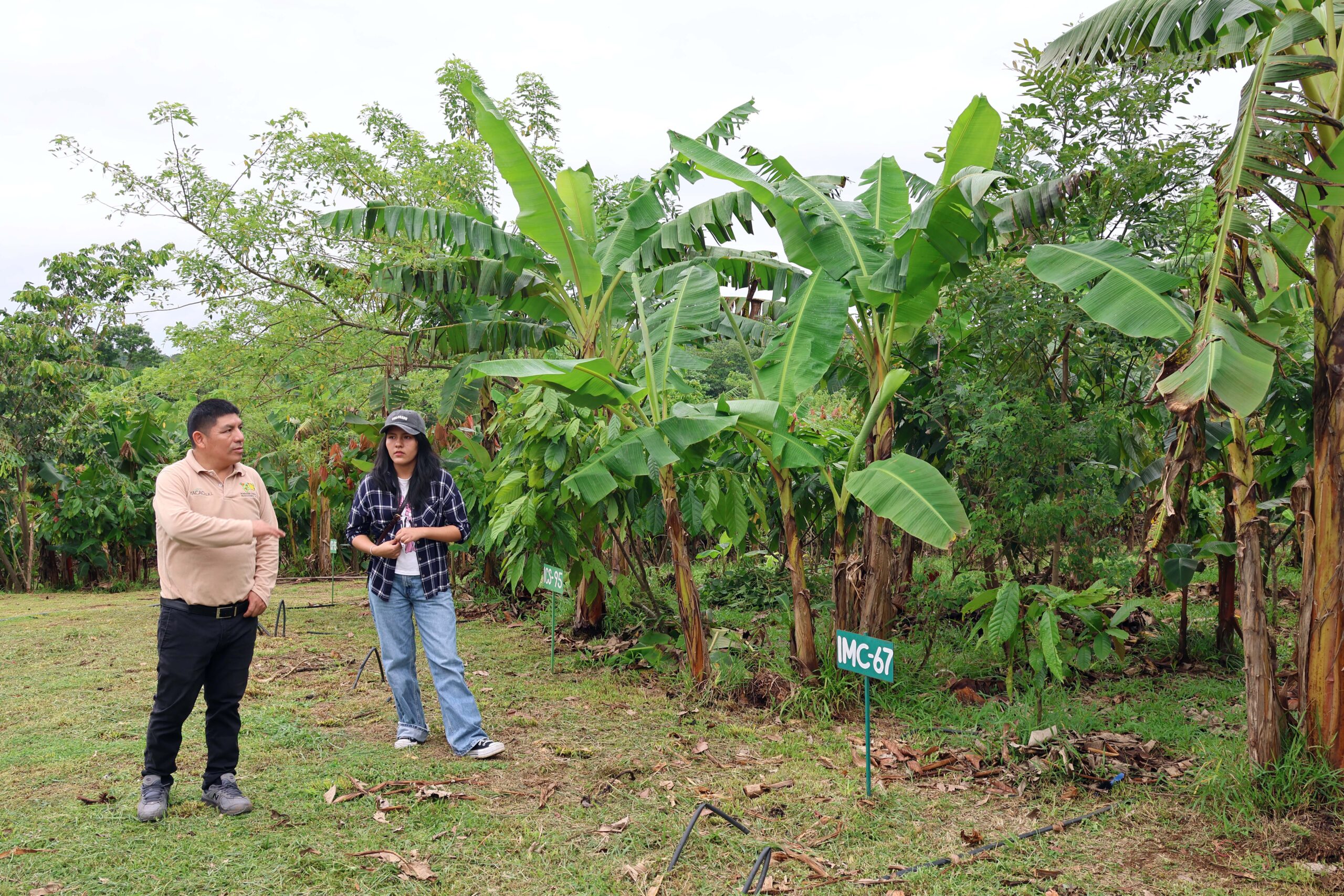
Alongside cocoa, FUNDOPO’s nursery also raises shade trees …
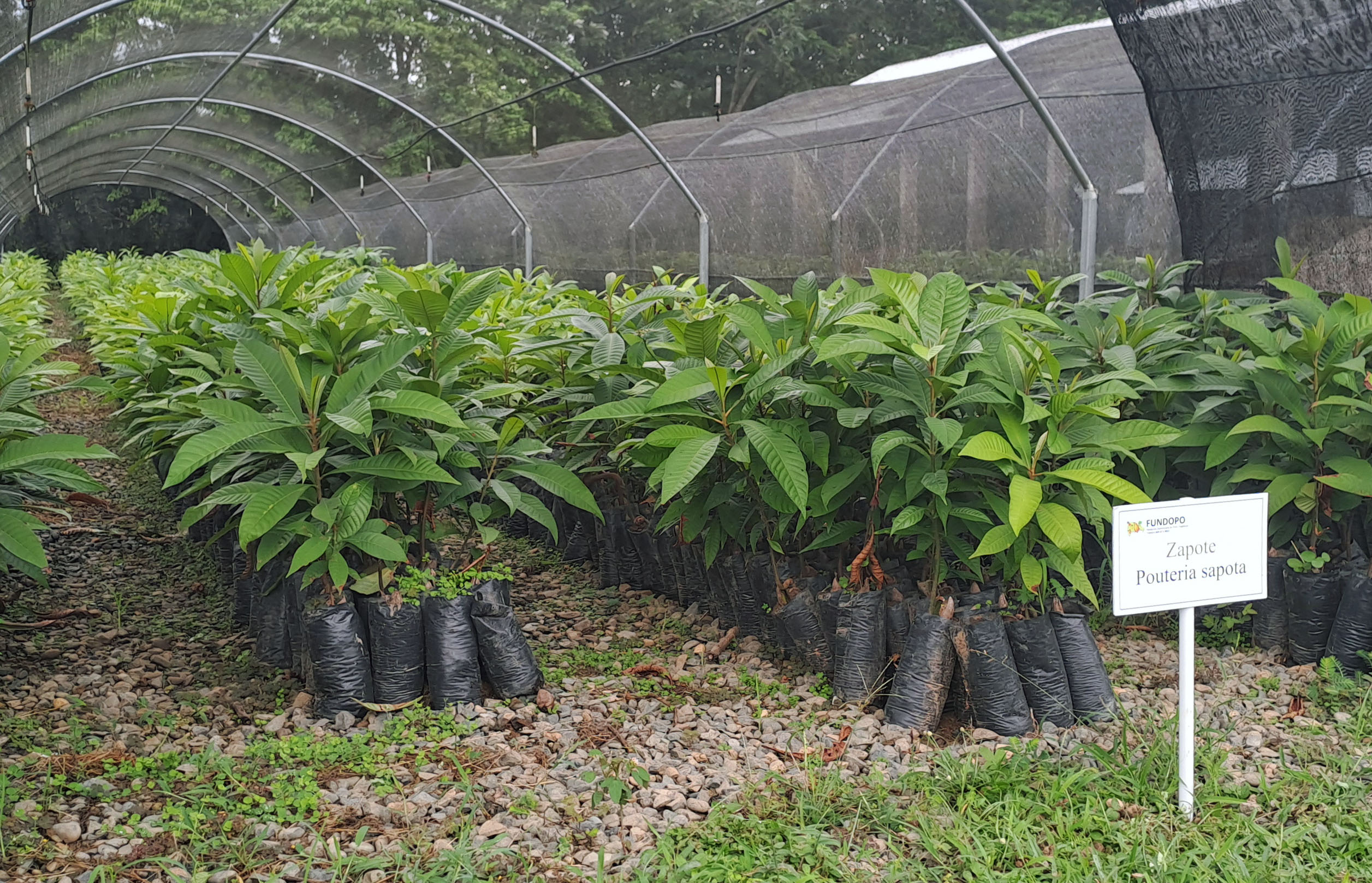
… and other useful species such as …
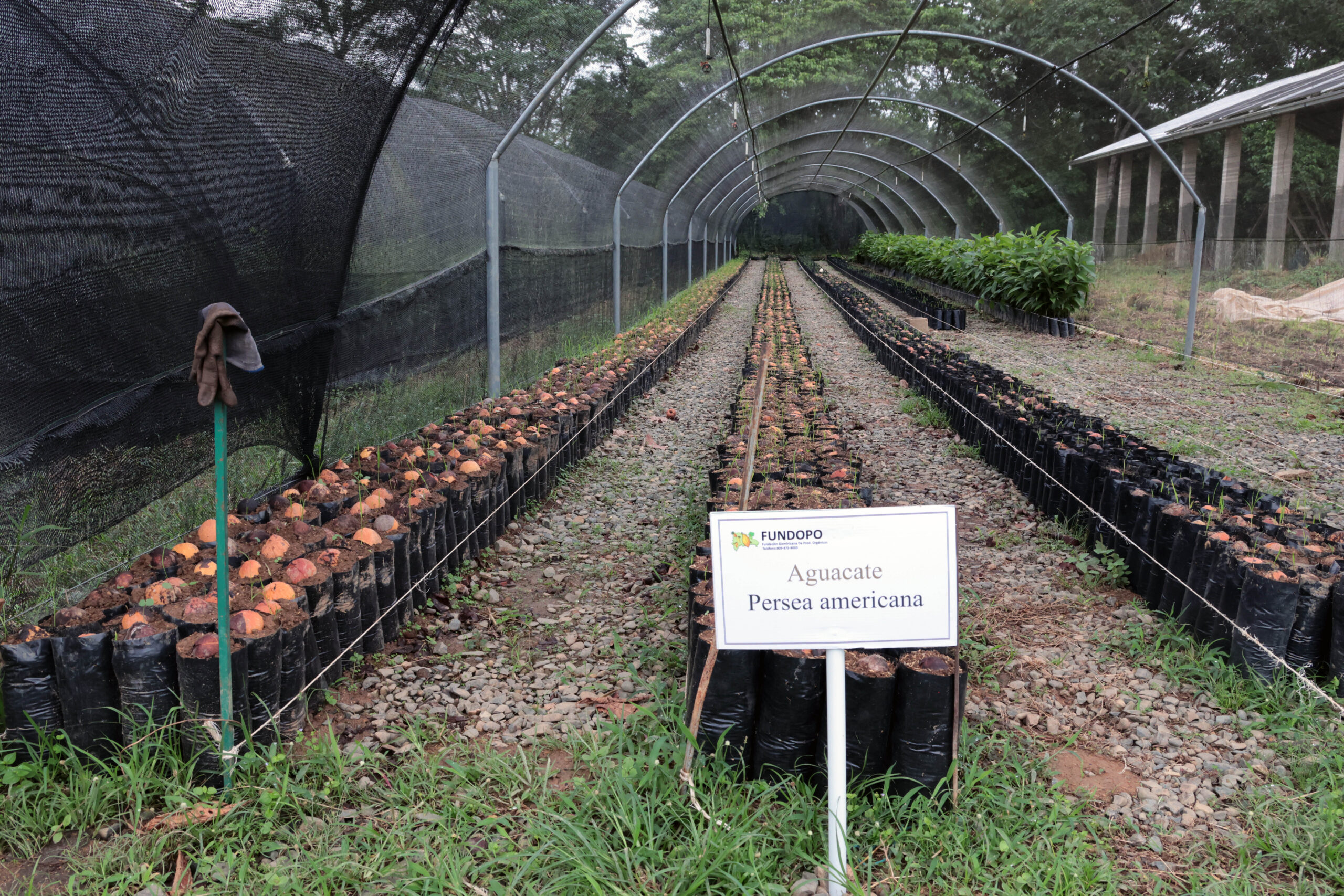
… avocado trees for diverse agroforestry systems on cocoa plots
